

Blog· August 31, 2026 · 5 min read
Preboarding: what's at stake between the signature and day one
Preboarding is the most neglected phase of onboarding — and the most decisive. A complete action plan from signature to Day -1, with a timeline.
The day your future hire signs their job offer (promesse d'embauche), two things happen. The first is visible: you celebrate the end of a recruitment process. The second is not: for them, a strange period begins, lasting one to three months, during which they have mentally left their current job without having entered yours. They are in limbo. And during this limbo, in most companies, they receive nothing. Not a piece of content, not a contact, sometimes not even their contract.
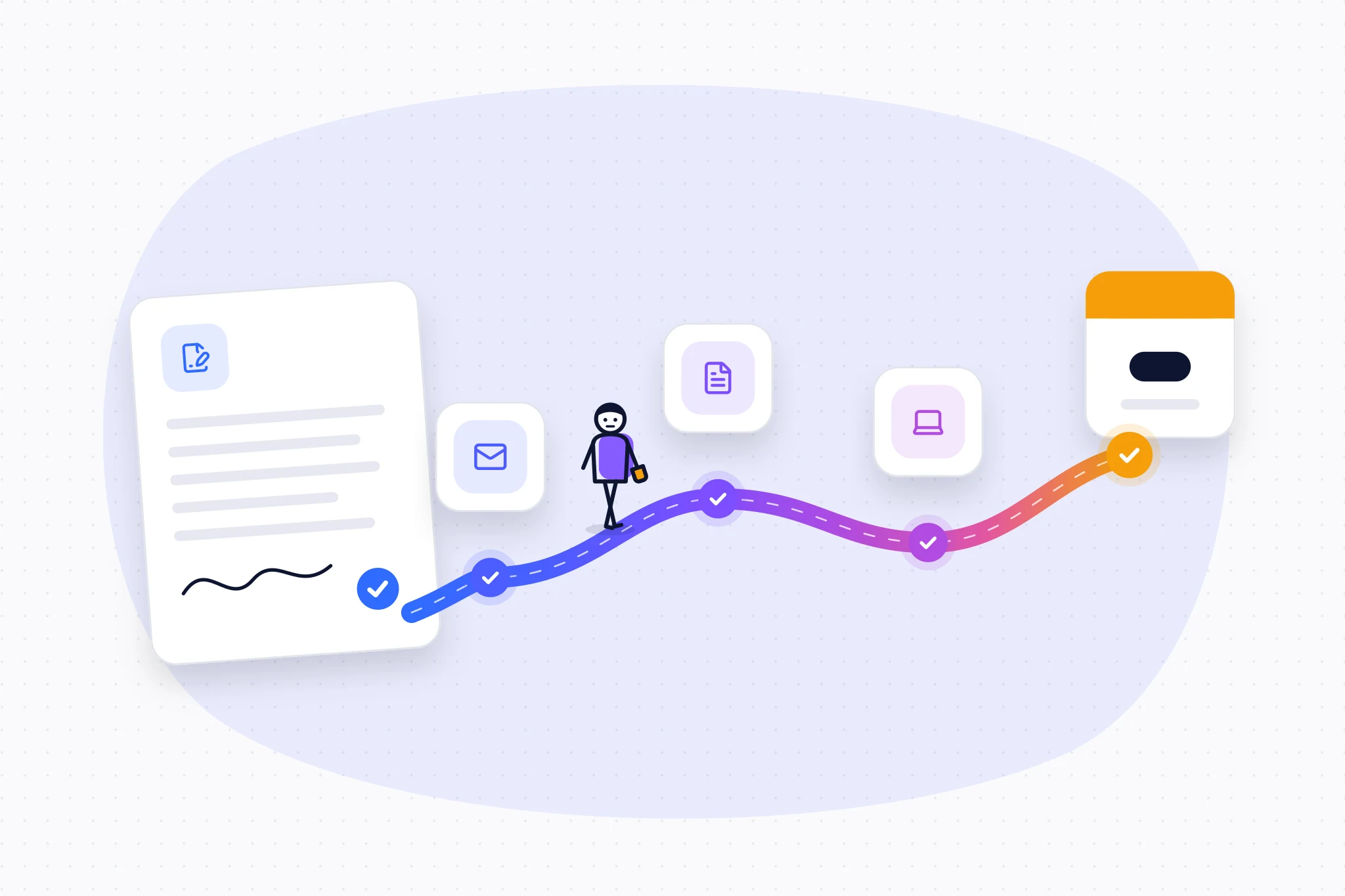
This period has a name — preboarding — and one defining feature: it is the phase of onboarding with the best effort-to-impact ratio, and the most systematically neglected.
Why these weeks matter more than the first month
Because the new hire is still on the market. They have signed with you, but headhunters don't know it — their LinkedIn profile still shows their current job, and the approaches keep coming. Their employer, on the other hand, does know: the counteroffer generally arrives within two weeks of the resignation. And if their notice period lasts three months, your new hire will spend twelve weekends wondering whether they made the right choice. Every week of silence on your part is an argument for the competition — the candidate who signs and never shows up is the purest form of failed hire: 100% of the cost, 0% of the value (the full calculation here).
Because engagement forms before arrival. Day one never starts from zero: the new hire arrives either confident ("they're expecting me, I already have my bearings") or anxious ("I haven't heard a thing since I signed"). This initial frame of mind colors the rest of the onboarding.
Because it's free time. All the administrative work and part of the discovery can be done before day 1 — at a time when the new hire is available and, more often than not, eager. What gets done before arrival frees up the first weeks for what requires being there: meeting people, hands-on work, the job itself.
The preboarding plan, step by step
Within 48 hours: the human signal
A message from the manager — not from HR, not a template. Two or three personal lines: "So glad you're joining us, the team knows and is happy about it, here's what's ahead between now and your start date, write to me anytime." This message takes ninety seconds and is, by far, the highest-return action of the entire onboarding: it turns a transaction into a relationship.
Within two weeks: the paperwork wrapped up
Contract, mutuelle (the company's supplementary health insurance), prévoyance (supplementary disability and life coverage), bank details (RIB), ID documents, DPAE (France's mandatory pre-hiring declaration). Two rules:
- Everything at once. Nothing wears a new hire down more than receiving five document requests in five emails over five weeks.
- Electronic signature. The print-sign-scan round trip is friction from another era; and a contract signed quickly is a commitment sealed quickly — it is also in your legal interest.
At Day -30: the substance
This is the moment to open the doors: a presentation of the company, the org chart and the faces of the team, in-house vocabulary, the first job-related content. Three pitfalls to avoid:
- The 80-page PDF. No one reads it, and it turns curiosity into a chore. Short, sequenced formats — fifteen minutes here and there — respect the fact that your new hire still has a job.
- The one-time info dump: sending everything in one go at Day -30, then nothing. Spread it out: one mailing a week keeps the connection alive better than a deluge followed by silence.
- Forgetting the questions. The new hire has dozens of them ("what do people wear?", "where do I park my car?", "what's the remote work policy?") and no one to ask without feeling like a bother. Give them an explicit channel: a named contact person, an FAQ — or an assistant available at any hour, because Sunday evening is when these questions come up.
At Day -7: logistics locked down and social connection
- Equipment ordered and tested, accounts created and tested — a workstation that doesn't work at 9 a.m. on day one is anti-preboarding: it wipes out all the goodwill built up in one fell swoop.
- First-day schedule sent: whom they will meet, when, and why. The unknown is the main source of night-before jitters; the schedule dissolves it.
- An informal contact: the buddy or a future colleague who writes "see you Monday, I'll wait for you downstairs at 8:50." Arriving already knowing someone changes the whole feel of the first day.
- The team has been told — with a first name, a role, a background. "Someone's starting Monday" is not an introduction.
What if the notice period is short?
Two weeks between signature and arrival? The plan compresses without changing its nature: the manager's message within 24 hours, paperwork and logistics in parallel from day 1, a single content mailing at Day -7. The essentials survive the compression; silence, on the other hand, is never mandatory.
What good preboarding changes, in practice
On the new hire's side: they arrive on day one having signed their documents, met (at least virtually) a colleague, understood the org chart and asked their naive questions away from prying eyes. They are not discovering the company — they are coming back to it.
On the company's side: day one stops being an administrative day and becomes a welcome day; the manager doesn't repeat what has already been read; and the risk of a no-show melts away — because a candidate engaged by six weeks of attention no longer responds to headhunters in the same way.
Finally, on the process side: preboarding is as measurable as everything else. Documents signed or not, content viewed or not, questions asked or total silence — a new hire who hasn't opened anything at Day -10 is a signal that warrants a phone call. Someone still has to see it.
At Weloom, preboarding is built in: from the signature, your new hire receives their journey (generated from your documents), signs their documents online, and asks their questions to an AI assistant in your company's colors — available on Sunday evening, when the real questions come up. You, in turn, see who is progressing and who hasn't opened anything. 14-day free trial.
Where to start: our onboarding checklist details the preboarding steps — audit your most recent onboardings against this list, and count the silences.