

Blog· August 17, 2026 · 7 min read
SMB onboarding process: the complete guide (Day -30 → Day 90)
The 4 phases of successful SMB onboarding, who does what, common mistakes, and what to measure — without a dedicated HR team.
In an SMB, nobody is "in charge of onboarding." There's an HR director (or a single HR person, or an executive who handles HR in the evenings), managers who are already stretched thin, and a new hire starting Monday. The result: every onboarding is reinvented from scratch, its quality depends on whichever manager is involved, and no one can say whether it went well — until a resignation four months in answers the question.
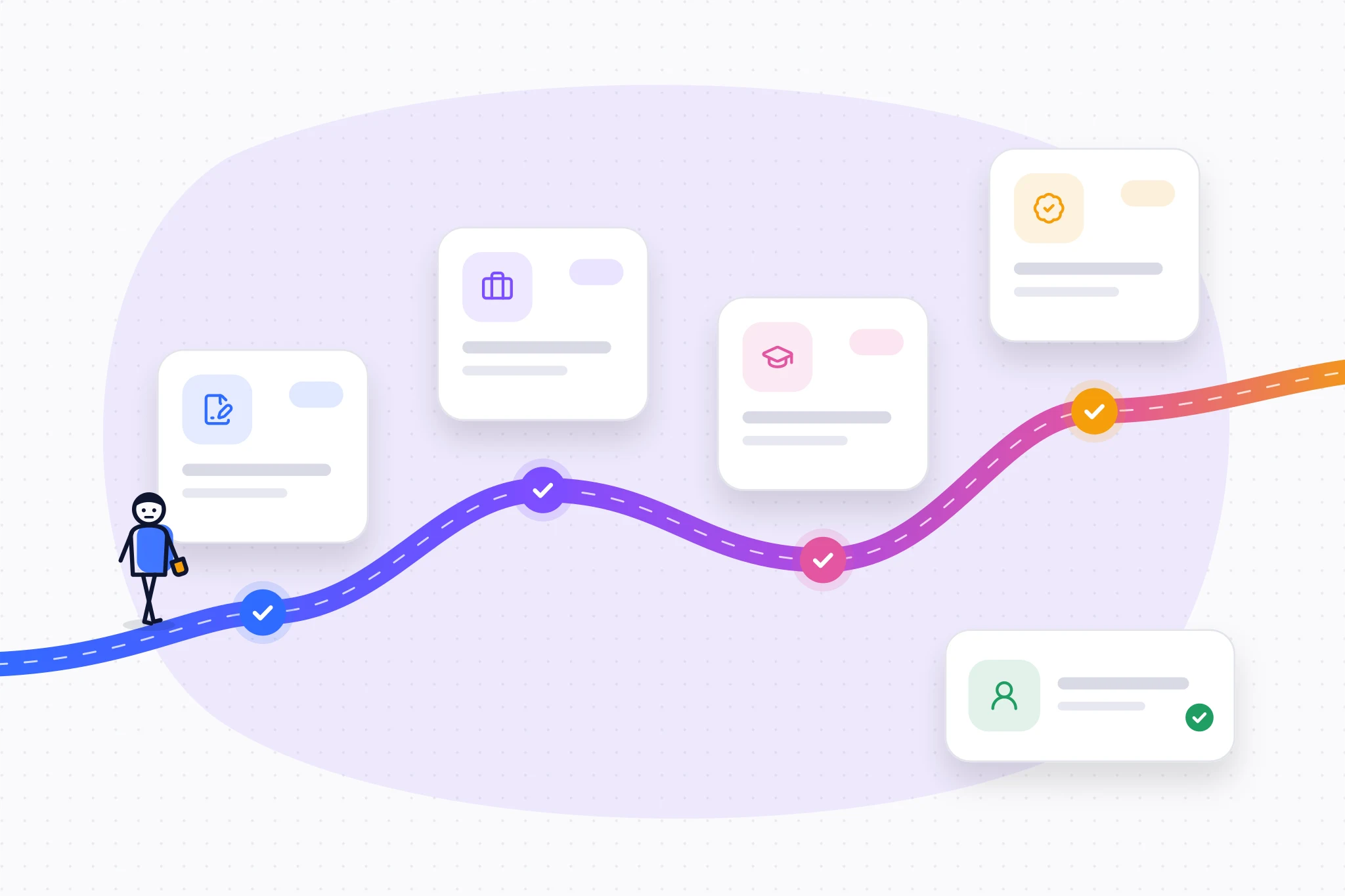
The good news: a solid onboarding process doesn't require a dedicated team. It requires structure, clear responsibilities, and two or three metrics. Here is the complete process, phase by phase, as it works for companies with 50 to 500 employees.
Onboarding starts at signing, not on day one
The first correction of scope, and the most important one: onboarding doesn't start on the Monday the new hire arrives. It starts on the day the contract is signed. In between, there can be one to three months of notice period — and during that time, your new hire is still on the market. They're getting messages from headhunters, they may have other hiring processes underway, and their current employer's counteroffer often arrives within two weeks of their resignation.
A candidate who signs and never shows up does happen, and it costs the full price of redoing the hire. That's why the process breaks down into four phases, the first of which comes before the start date. (We've devoted an entire article to preboarding, because this phase is as decisive as it is neglected.)
Phase 1 — Preboarding (from signing to Day -1)
The goal: turn the wait into engagement. The new hire should feel that they're expected, and arrive on day one already a step ahead.
Concrete actions:
- Within 48 hours of signing: a personal message from the manager (not an HR acknowledgment of receipt). Two lines are enough: "We're thrilled, here's what's ahead, feel free to reach out in the meantime."
- Within 2 weeks: the paperwork is underway — contract, supplementary health insurance (mutuelle), documents to sign. Every print-and-scan round trip is a point of friction; e-signature solves the problem.
- At Day -30: give them material. A company overview, the org chart, initial job-specific content. Not an 80-page PDF: short, sequenced formats they can browse from the couch.
- At Day -7: logistics locked down (equipment ordered, accounts created, first-day schedule sent) and a human contact — a future colleague or a "buddy" who introduces themselves.
The common mistake: radio silence. It's the norm in most SMBs, and it's exactly what new hires who end up ghosting have experienced.
Phase 2 — Day one and the first week (Day 1 → Day 7)
The goal: zero visible improvisation. The new hire should leave their first day feeling that their arrival was prepared — because it was.
Concrete actions:
- The workstation works at 9 a.m. Accounts, access, equipment: everything was tested the day before. It's basic, yet it's the most frequent and most memorable failure.
- Day one has a written agenda, sent before arrival: who they'll meet, when, and why.
- The manager is physically available on the morning of day one. Not "between two meetings": available.
- The first week alternates between three kinds of time: meetings (team, key contacts), content (products, processes, culture — in short formats), and a first real contribution, however modest, before Friday.
The common mistake: force-feeding. Eight hours of introductory meetings on day one don't create integration; they create shell shock. Spread things out.
Phase 3 — Ramp-up (Day 8 → Day 30)
The goal: autonomy on the core of the role. By Day 30, the new hire should be producing real value, even within a limited scope.
Concrete actions:
- A structured, sequenced journey: which content, which meetings, which hands-on practice, in what order. Progressive unlocking (step 4 only opens after step 3) prevents drowning and gives a sense of progress.
- Short, regular check-ins with the manager — 30 minutes a week is better than a two-hour "review" at Day 30.
- Comprehension checks. A short quiz after an important module isn't patronizing if it's done well: it's a safety net that keeps you from discovering at Day 60 that a critical process was never understood.
- A channel for "dumb" questions. This is THE silent friction point: the new hire doesn't dare ask again where to find a given document or how to request time off. They waste time, or they improvise. A designated point person — or an always-available assistant — changes the feel of this period.
What to measure: progress through the journey (who has seen what), the results of the checks, and above all the warning signs — a new hire who hasn't looked at anything in ten days isn't doing well, and you'd better find out before they do.
Phase 4 — Consolidation (Day 30 → Day 90)
The goal: confirm the trajectory and detect late disengagement. Most early departures are decided between the first and fourth month — often in silence.
Concrete actions:
- Formal milestones at Day 30, Day 60, and Day 90: a structured check-in, with the same questions each time to see how things evolve (workload, role clarity, relationship with the team, gap between promise and reality).
- A "fresh eyes" report (rapport d'étonnement) at Day 30: the new hire's fresh perspective is an asset that expires. Capture it before everything starts to seem normal to them.
- 360° feedback: the new hire evaluates their onboarding, the manager evaluates their ramp-up — and HR sees both, which defuses what goes unsaid.
- A gradual widening of scope, formalized: at Day 90, the new hire and the manager must agree on "what has been mastered" and "what comes next."
The common mistake: considering onboarding finished at the end of the administrative probationary period. Confirming the probationary period is a legal event, not proof of successful onboarding.
Who does what: the division of roles that works
| Role | Responsibility | Realistic workload |
|---|---|---|
| HR | Designs the process, prepares preboarding, tracks progress, orchestrates the milestones | High during design, low afterward if the process is supported by a tool |
| Manager | Welcome message, availability on Day 1, weekly check-ins, assessment at milestones | ~1 hr/week — no more, or they won't do it |
| Buddy/mentor | Informal contact before Day 1, answers to everyday questions, lunches | Structured volunteering, ~30 min/week |
| The new hire | Progresses through their journey, asks their questions, shares what surprises them | It's THEIR onboarding: give them visibility into where they stand |
The guiding principle: HR builds the structure once; everyone else does a little, but does it well. A process that asks an SMB manager for ten hours per new hire is a process that won't be followed.
Paper, spreadsheet, or platform: the tooling question
Everything above can be done with a shared document and some discipline. In fact, that's how you should start if you're beginning from scratch: write down the process, apply it twice, fix it.
The limits of a manual approach appear with volume: from around ten hires a year, the logistics (reminders, checklists, documents, accounts) eat up HR's time, the experience becomes manager-dependent again, and above all, no one sees anything — neither who has read what nor who is disengaging. That's when a dedicated tool becomes worthwhile: automate the mechanics, keep people for the human moments, and give HR the visibility it lacks.
At Weloom, we built our platform around exactly this observation: your existing documents become an AI-generated onboarding journey, each new hire is supported from the moment they sign by an assistant in your company's colors, and you see everyone's progress — with an alert when someone stalls. 14-day free trial.
Where to start, in practice
- Write down your current process — even if it fits in six lines. You can only improve what you can see.
- Add the phase that's almost always missing: preboarding.
- Set three metrics: time to autonomy, journey completion at Day 30, and a structured check-in at Day 30/60/90.
- Check out our 30-60-90 onboarding plan (four role-specific plans, a preboarding checklist, recurring questions) to audit your process in twenty minutes.
Good onboarding doesn't make noise — no day-one crisis, no surprise resignation four months in, no manager explaining for the thirtieth time where the shared drive is. Just new hires who, one fine morning, act as if they'd always been there. That's the only goal that matters.